…
How it works
The Source
From the families who grow it to the bar that leaves the country
The land
Between the cloud forest and everything else.
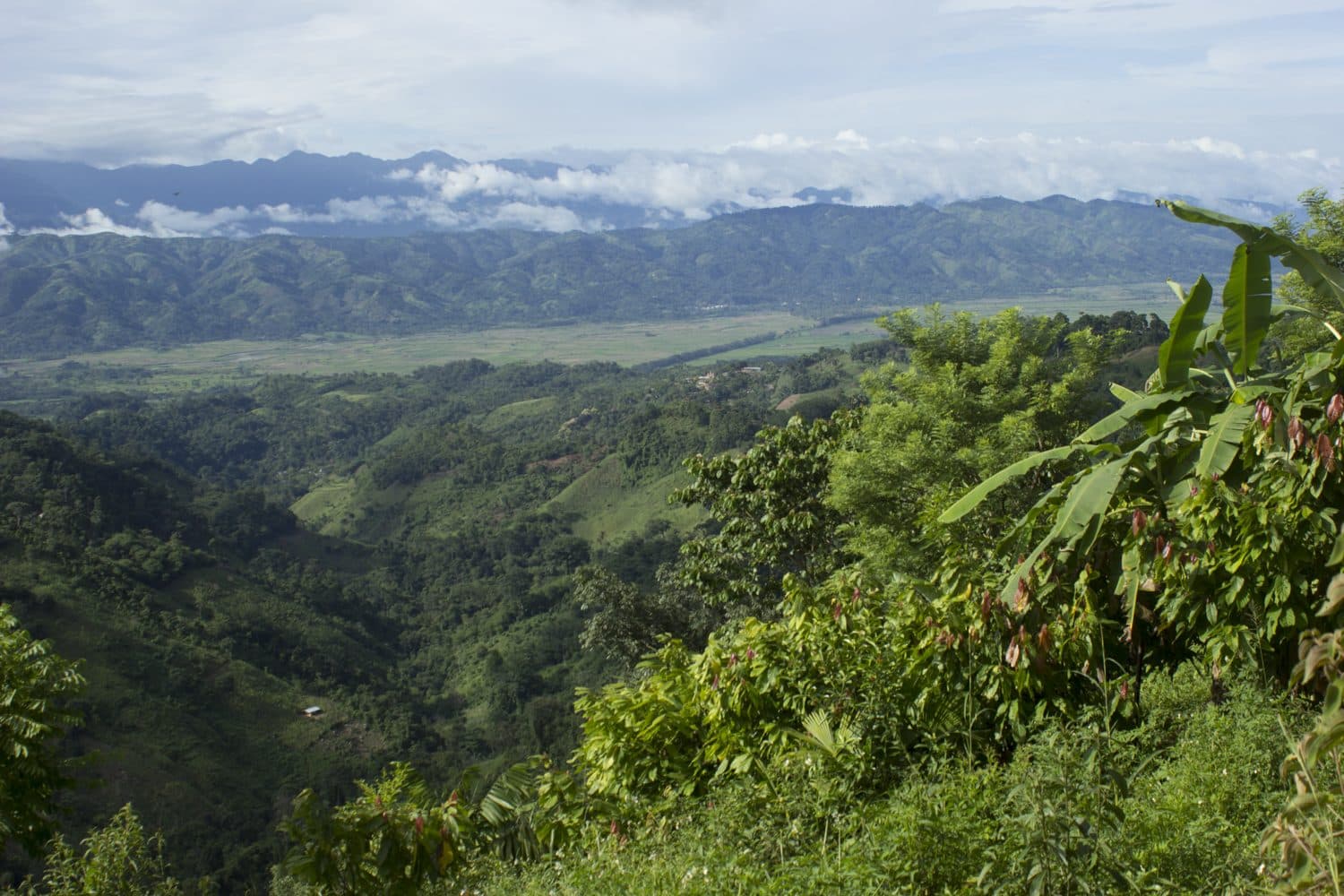
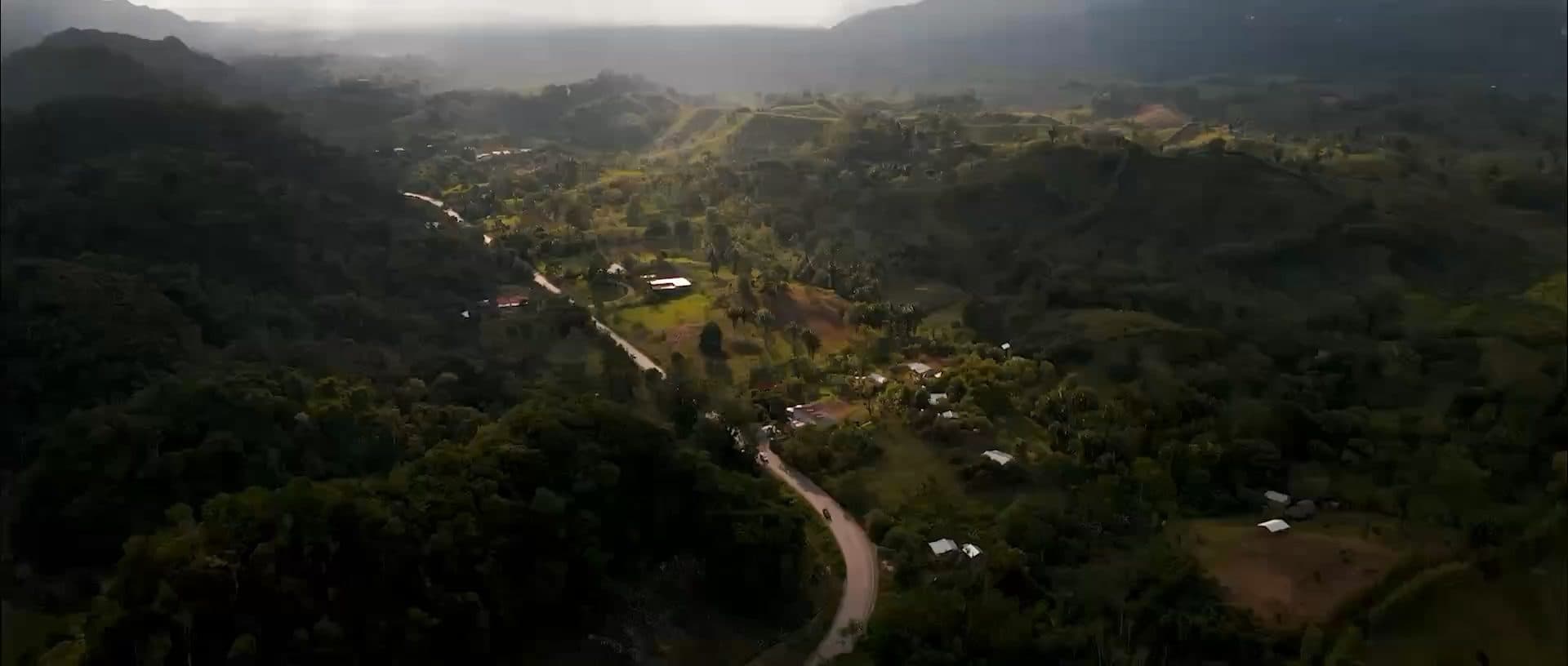
Our cacao grows inside the buffer zone of the Sierra de las Minas Biosphere Reserve, where the water of more than sixty rivers begins. A buffer is not scenery. It is the belt that decides whether the pressure of the valley reaches the forest or stops here. Downstream the same water arrives at Bocas del Polochic, a Ramsar site since 1996 and the country’s largest manatee refuge.
240,537
hectares of reserve
Sierra de las Minas, co-managed since 1990 by Fundación Defensores de la Naturaleza and CONAP. The largest cloud forest in Central America: 1,690 species of flora, 575 of fauna, and around 280,000 people in more than 200 communities living off its water.
240 m
above sea level
Measured in the association’s own community: 26 °C on average and 2,500 to 3,500 mm of rain a year. Low, warm and wet. This valley is not highland, and cacao will not set fruit in the cold.
100%
organic management
Every producer in the survey, and not because of a certificate: it is what a buffer zone asks of you. Ninety-five per cent of them work a hectare or less.
The people
Around 180 Q’eqchi’ families.
They are the ones standing in the buffer. We buy from AJ ASIPASM, their own association, in the village of Jolomijix in Panzós: they run the fermentation house, the drying beds and the warehouse themselves, they keep their own production costs, and they sell as one body instead of one family at a time. Ninety-five per cent of them work a hectare or less.
The association that grows and ferments our cacao was formed to put trees back on land that had been in maize and beans. We do not arrive with a price and a clipboard: we buy through the association, on the terms it negotiates, and we have held ours at Q90 a kilo through the entire collapse of the world price.
01
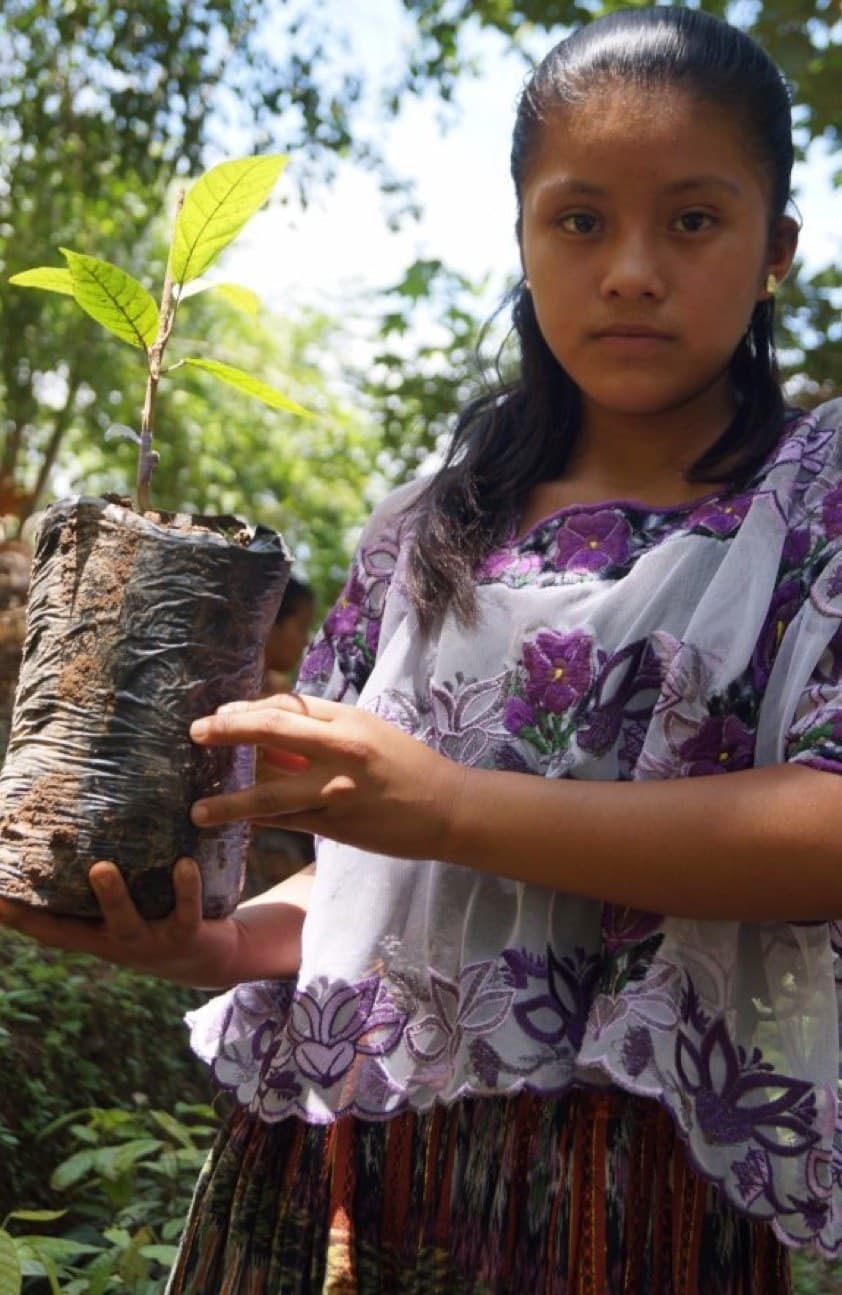
Plant
It germinates in a bag, under shade, for months before it goes out to the field.
02
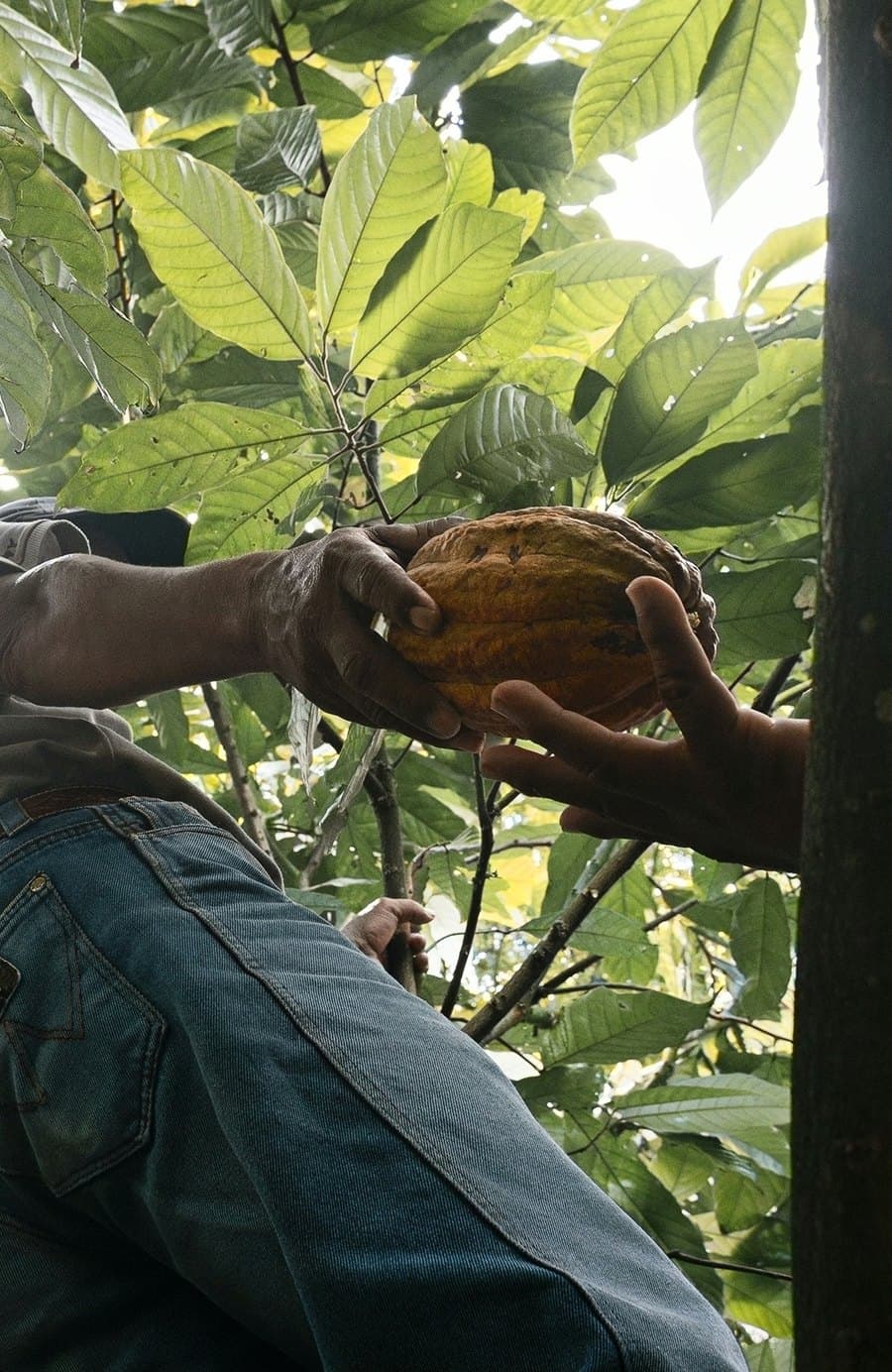
Harvest
Several rounds a season, each pod judged by colour and sound and taken with a blade.
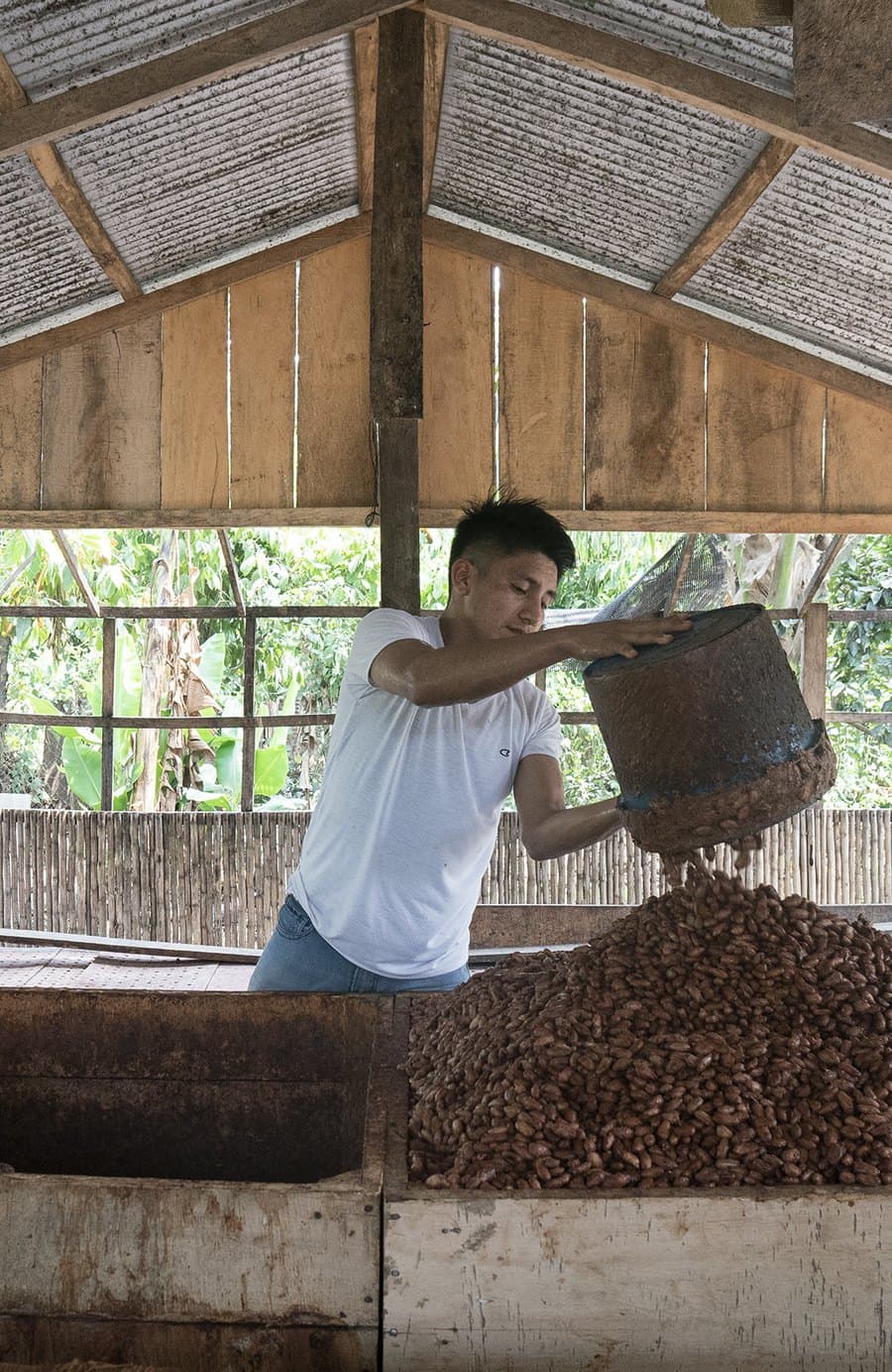
03
Ferment
This is where the flavour is made. Nothing downstream puts back what was never made here.
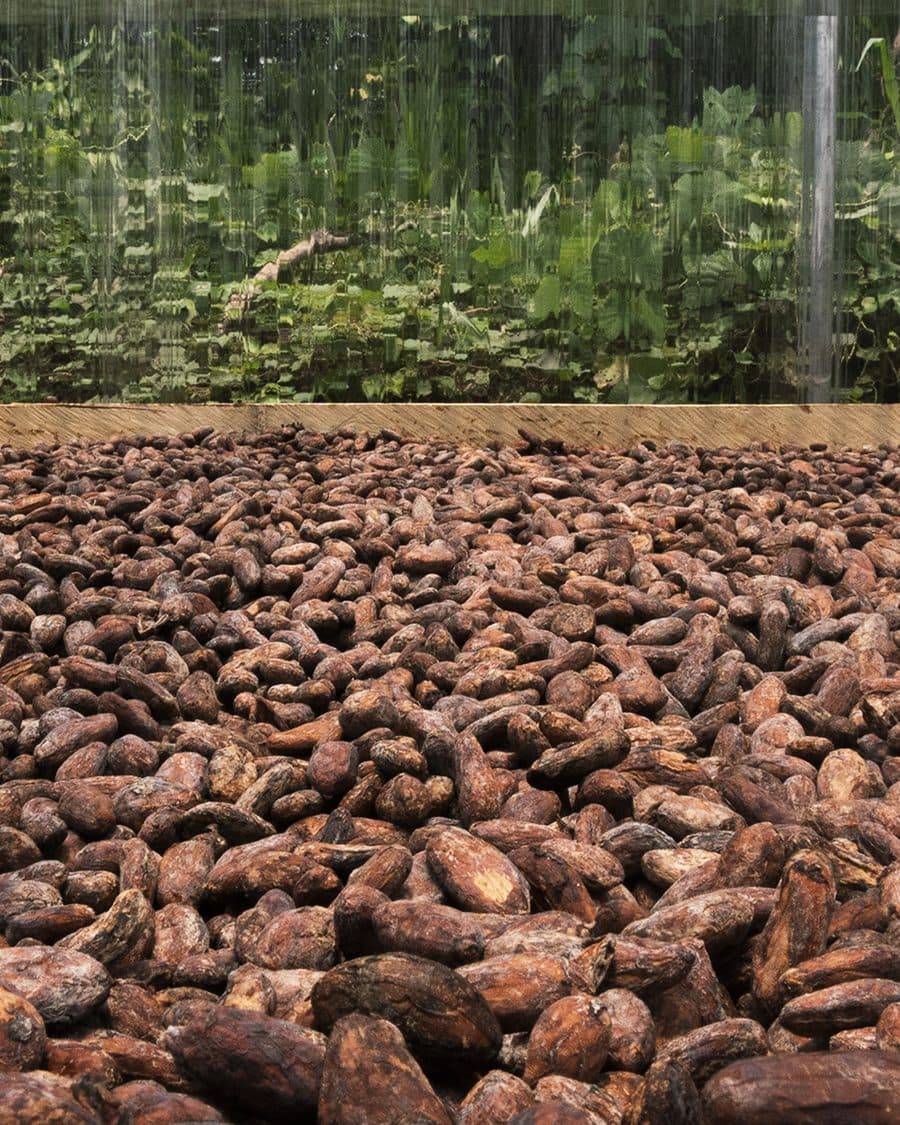
04
Dry
Out in the sun on the same farm, over days rather than hours. The pace is deliberate.
The process
Craft is not the same as guesswork.
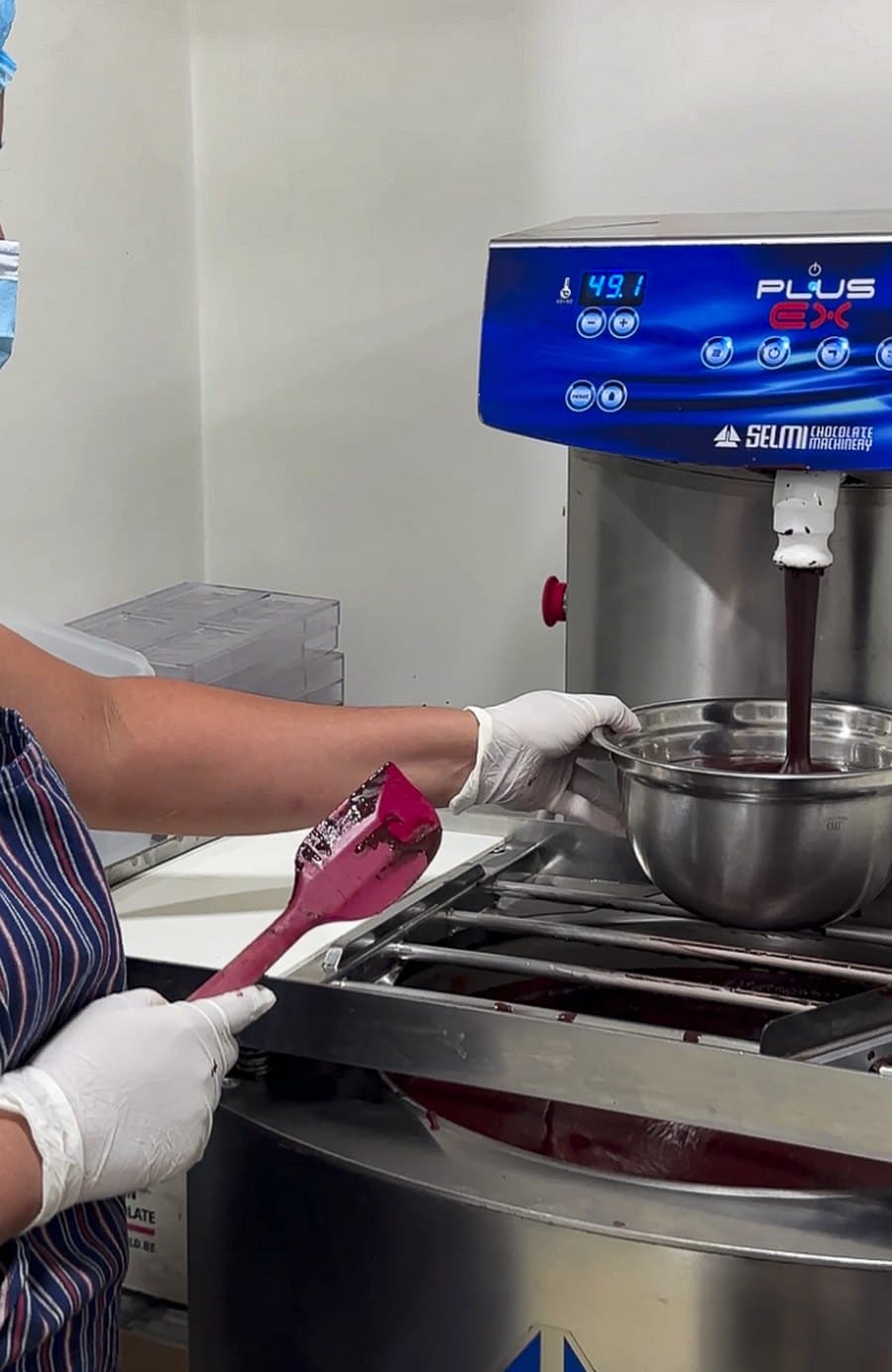
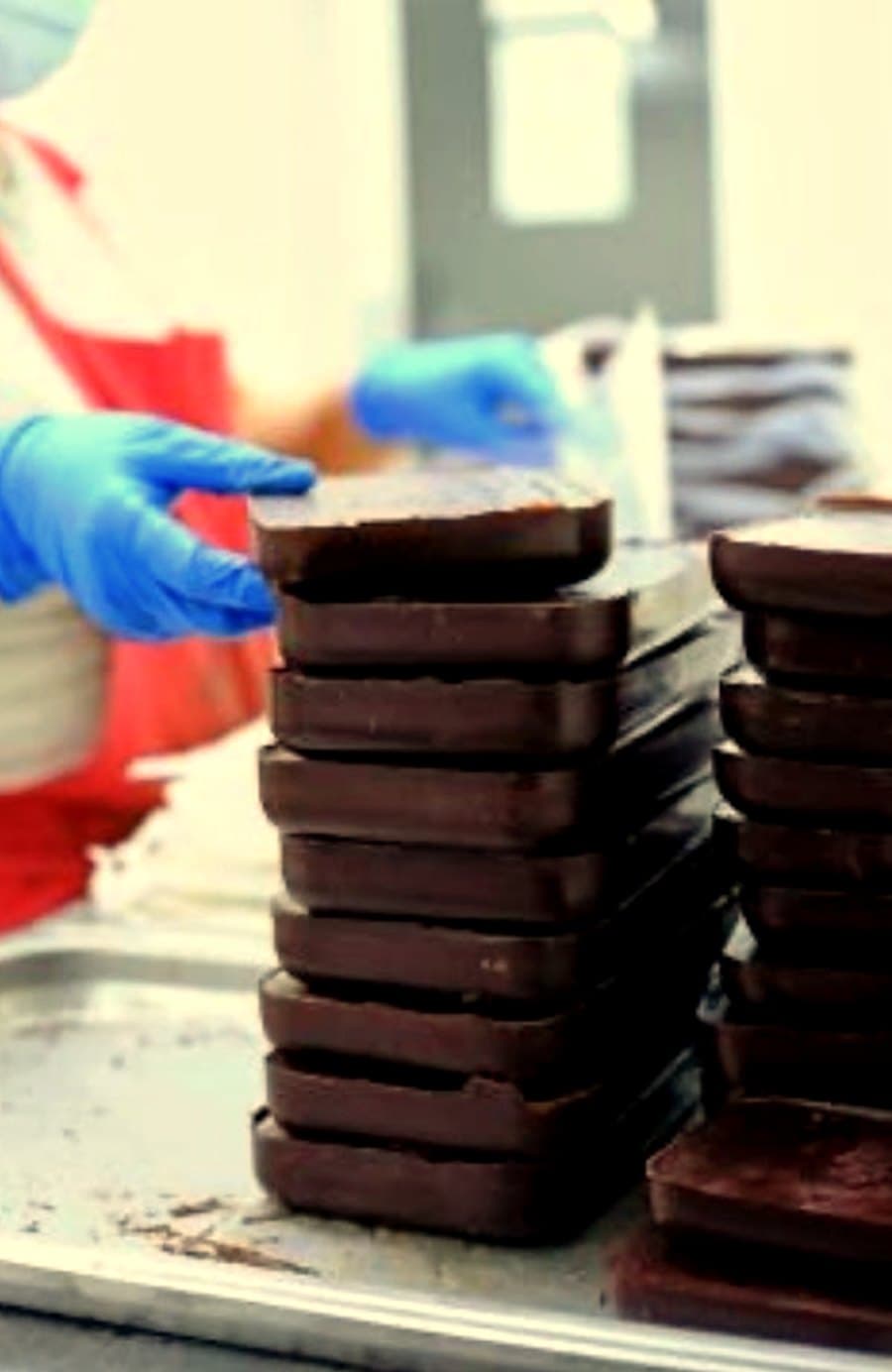
Four more steps, and each one of them is a measurement. Roasted to a profile set origin by origin, with control of time, temperature and airflow. Refined until the texture disappears. Tempered to the curve that decides whether a bar snaps or smears. That takes instruments and it takes people who can read them, and the point of both is narrower than it looks: the flavour was already made, up in the fermentation boxes. Nothing down here can add to it. It can only fail to lose it.
And all four happen inside the country. A place that grows cacao and ships it raw is selling the cheapest thing it owns; every step kept here is value that does not leave with the sack.
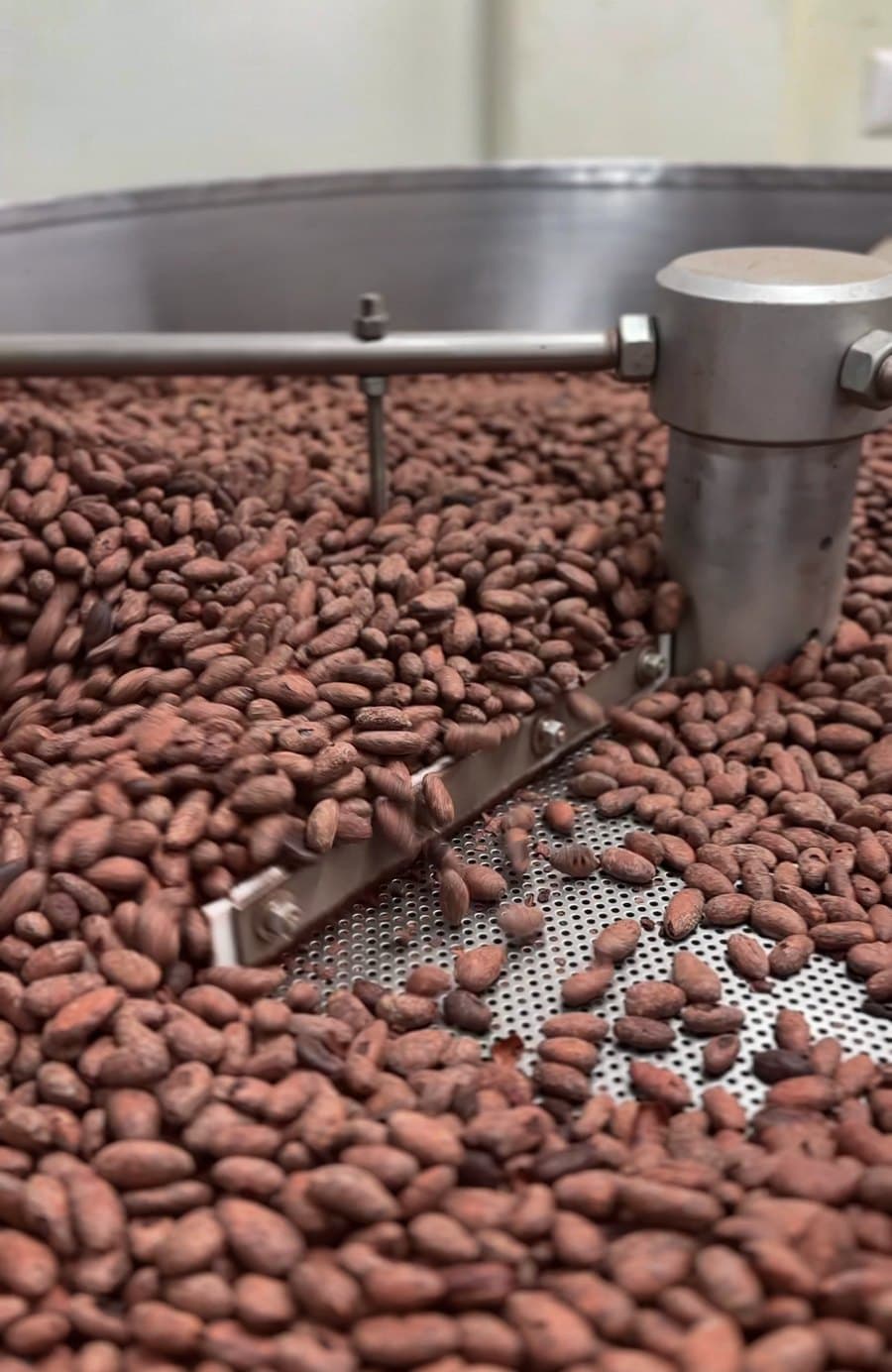
05
Roast
Roasted to a measured profile, origin by origin.
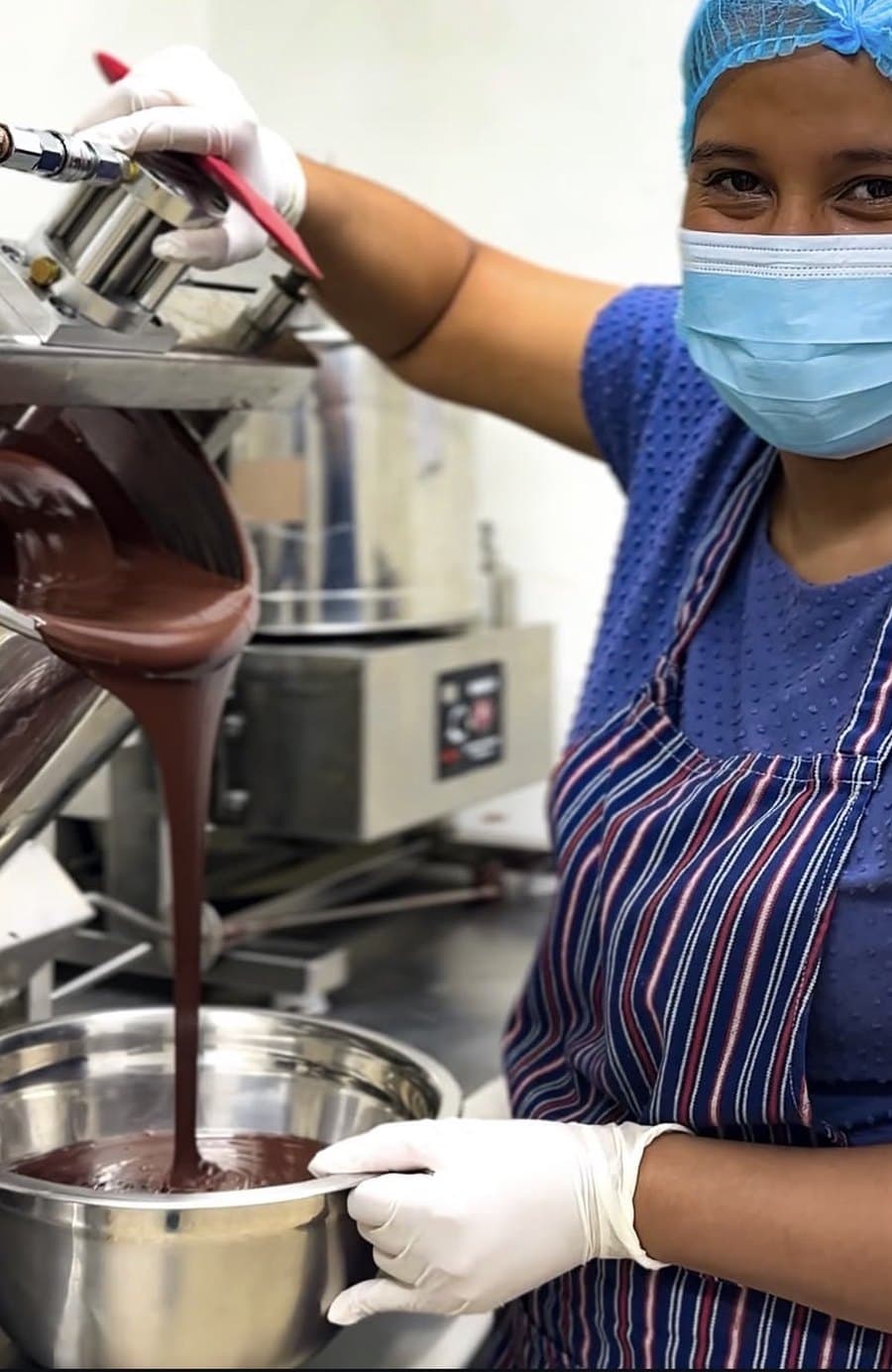
06
Refine
Ground and refined until the texture disappears.
07
Temper
Tempered, so it snaps and holds its shine.
08
Package
Wrapped, labelled and boxed here, before any of it leaves.
Guatemala
That is the whole point. The value added by roasting, refining and tempering stays in the country that grew the bean, instead of leaving in a sack.
The craft
Why we do not roast over fire.
Fire is the picture most people carry of cacao: an open flame, a clay comal, hands that have done this for generations. It is beautiful, and it is easy to see why the industry sells it. But fire is moody. It runs hot in one spot and cool in the next, and it never does the same thing twice. The roast comes out uneven, and a harsh, smoky bitterness creeps in over the delicate flavour the bean spent a season growing.
There is a cost that cannot be tasted, too. A life spent bent over a smoky fire is a life spent breathing woodsmoke, which the World Health Organization ties to millions of premature deaths a year, hardest on the women who tend it. Selling "hand-roasted over open flame" as charm asks someone else to pay for it with their health. We will not.
We did not leave the fire behind to be modern. We left it behind to protect a flavour, and to protect the people who make it.
So we chose precision instead: a controlled roast that never runs hot, on equipment that holds temperature, airflow and time exactly where they belong, the same clean roast whether it is one kilogram or a thousand. Low, careful heat does two things at once. It keeps the bright, fruity notes the bean was grown for, and it protects the delicate compounds that a hard, high-heat roast simply burns away.
And here is the part that matters most to us: we do not want this equipment to live in one facility forever. The goal is to place it in the hands of the communities that grow the cacao, so the roast, the skill and the value all stay where the bean began.
Grown in the shade
A cacao tree is an understory tree.
Left alone, cacao grows beneath something taller. Full sun makes it produce more and it makes it need more: fertiliser, irrigation, and a cleared field. Our farmers keep the forest over it instead, which means the grove is never only cacao.
59
species of shade tree
A survey of 70 plots in this region counted 2,519 shade trees over the cacao: 59 species from 34 botanical families.
50.69%
of them are legumes
Fabaceae dominate, and the commonest of all is Gliricidia sepium · madre cacao, the mother-of-cacao tree our own illustrations are drawn from. Legumes fix nitrogen: the shade feeds the soil as well as cooling it.
75%
of a monoculture’s yield
Across 52 studies, cacao under agroforestry yields on average three quarters of what the same land gives in full sun. We take the quarter as the price of the forest.
Does the shade make it taste better? Nobody can put a number on that, and we are not going to invent one. What the shade gives is the terroir · the forest, the soil, the slow ripening under a canopy of fifty-nine other trees.
How we hold ourselves
Values are easy to print. These are the ones we do not trade.
We keep the value at origin.
We never export raw beans. If the flavour is added in Guatemala, the income is added here too.
We pay for it in the open.
We have held Q90 a kilo through the entire collapse of the world price. That gap is not charity, and it is not an accident. It is the whole point of the company.
We protect the forest that shades the cacao.
The cacao grows under a living canopy of dozens of shade-tree species, led by the one the growers call madre de cacao, at the edge of the Sierra de las Minas. Keeping heirloom cacao profitable under that canopy gives the families a living reason to leave the forest standing.
We borrow no one’s story.
We honour the Maya and Mexica peoples who gave the world cacao, but we will never turn their images, their dress or their spirituality into a sales hook. Respect is not a marketing device.
We say only what we can prove.
When we know something, we show the source. When we do not, we say so plainly.
What reaches you
Cacao. And nothing else.
When all of it is done, the fair price, the standing forest, the gentle roast, what reaches you is almost absurdly simple: cacao grown by families we can name, in a valley we can point to, roasted with enough care that nothing stands between you and it.
That is the whole ambition: not a longer list of ingredients, but a shorter one, held to a higher standard.
Cacao opens your heart.
We just make sure nothing stands in the way of it.